

Nestled in the Annapurna region of Nepal, the Ghorepani Poon Hill Trek stands as one of the world’s most accessible and breathtaking short mountain journeys. Celebrated for its sweeping panoramic views of the Himalayas, vibrant rhododendron forests, and rich cultural interactions, this trek offers an unforgettable Himalayan experience without requiring weeks of high-altitude endurance.
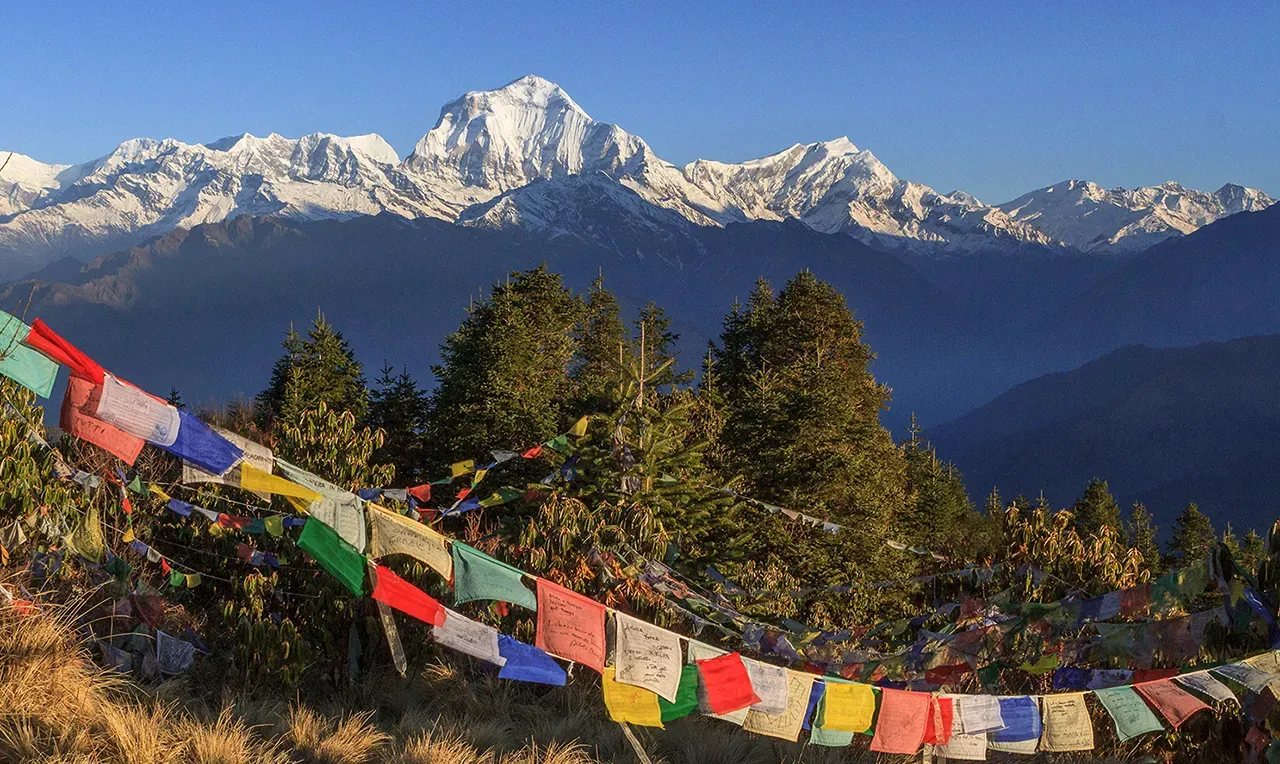
Whether you are a seasoned hiker short on time or a beginner embarking on your first mountain adventure, Ghorepani Poon Hill delivers classic trekking landscapes within a manageable 4 to 5-day itinerary.
Key Highlights of the Trek
-
Poon Hill Viewpoint (3,210m / 10,531ft): Stand face-to-face with two 8,000-meter giants—Dhaulagiri (8,167m) and Annapurna I (8,091m)—as sunrise illuminates their frozen peaks in brilliant shades of gold and rose.
-
Ancient Rhododendron Forests: Walk beneath canopy trails that transform into a vibrant crimson, pink, and white sea of blossoms during spring.
-
Cultural Immersion: Pass through charming, stone-paved traditional villages inhabited by the Gurung and Magar communities, known worldwide for their hospitality and rich traditions.
-
Accessible Mountain Trails: Well-maintained stone staircases, well-established tea houses, and gradual elevation shifts make this an ideal entry-level Himalayan trek.
Detailed Day-by-Day Itinerary
While variation exists depending on your starting location and pacing preferences, the classical 4-day loop beginning and ending in Pokhara represents the gold standard for route planning.
+—————————————————————————————+
| ROUTE OVERVIEW |
| Pokhara –> Nayapul/Ulleri –> Ghorepani –> Poon Hill –> Tadapani –> Ghandruk –> Pokhara |
+—————————————————————————————+
Day 1: Pokhara to Tikhedhunga / Ulleri
-
Distance: ~10 km / 6.2 miles
-
Trekking Time: 4 to 5 hours
-
Starting Altitude: 820 m (Pokhara)
-
Ending Altitude: 1,960 m (Ulleri)
The adventure begins with a 1.5 to 2-hour scenic drive from Pokhara to the trailhead at Nayapul or Birethanti. Following the gentle banks of the Modi Khola river, the trail weaves past terraced fields, small farming settlements, and cascading waterfalls.
After passing through Tikhedhunga, trekkers face the day’s primary physical challenge: the famous stone staircase to Ulleri. Consisting of roughly 3,300 stone steps climbing steeply upward, this section tests your leg strength but rewards you with elevated views of the valley and your first clear glimpses of Annapurna South (7,219m).
Day 2: Ulleri to Ghorepani
-
Distance: ~11 km / 6.8 miles
-
Trekking Time: 5 to 6 hours
-
Ending Altitude: 2,874 m (Ghorepani)
Leaving Ulleri, the trail eases into a steady, shaded climb through enchanted oak and dense rhododendron forests. As you gain elevation, the air grows cooler, and distant waterfalls echo through the tree canopy.
You will pause for lunch in Banthanti or Nangethanti before continuing upward. By mid-afternoon, you arrive at Ghorepani—historically an important resting post where ancient traders watered their horses (Ghore means horse, Pani means water). The upper village offers dramatic, unobstructed vistas of Hiunchuli, Annapurna South, and the towering silhouette of Dhaulagiri across the Kali Gandaki Gorge.
Day 3: Ghorepani to Poon Hill, then to Tadapani
-
Distance: ~13 km / 8 miles (including morning summit hike)
-
Trekking Time: 6 to 7 hours total
-
Peak Altitude: 3,210 m (Poon Hill summit)
-
Ending Altitude: 2,630 m (Tadapani)
An early wake-up call (around 4:30 AM) kicks off the central highlight of the trek. Carrying light daypacks and equipped with headlamps, you begin the 45-to-60-minute pre-dawn ascent up Poon Hill.
As the morning light breaks, a panoramic skyline unfolds across the horizon, including:
-
Dhaulagiri I (8,167m)
-
Annapurna I (8,091m)
-
Annapurna South (7,219m)
-
Machhapuchhre / “Fishtail” (6,993m)
-
Nilgiri (7,061m)
-
Hiunchuli (6,441m)
After absorbing the morning light and photographing the peaks, descend back to Ghorepani for a hearty breakfast. The journey then proceeds toward Tadapani along ridgelines, descending into mossy ravines, and ascending short climbs through dense forests that are frequently visited by gray langur monkeys.
Day 4: Tadapani to Ghandruk, Drive to Pokhara
-
Distance: ~9 km / 5.5 miles (trekking)
-
Trekking Time: 3 to 4 hours
-
Ending Altitude: 820 m (Pokhara)
The final trekking day delivers a pleasant descent through bamboo and oak forests toward Ghandruk, one of the largest and most famous Gurung villages in the region. Characterized by traditional slate-roofed stone houses, clean cobble lanes, and an impressive backdrop of Fishtail Mountain, Ghandruk provides an ideal spot to stop for lunch and explore the local cultural museum.
From Ghandruk, you hike down to the jeep station for a scenic 3-hour drive back to Pokhara, concluding your mountain circuit.
Best Time to Trek Ghorepani Poon Hill
Seasonal timing dramatically influences trail conditions, weather visibility, and overall mountain aesthetics.
+—————————————————————————————+
| SEASONAL COMPARISON |
+——————-+—————————+—————————————+
| Season | Weather & Visibility | Key Highlights |
+——————-+—————————+—————————————+
| Spring (Mar–May) | Mild temp, clear mornings | Wild rhododendron blooms in crimson |
| Autumn (Sept–Nov) | Crisp air, highest clarity | Post-monsoon clear skies, festivals |
| Winter (Dec–Feb) | Cold, occasional snow | Quiet trails, crisp winter views |
| Monsoon (Jun–Aug) | High rainfall, clouds | Lush greenery, leeches, obscured view |
+——————-+—————————+—————————————+
Spring (March to May)
Spring is widely considered the most colorful period for this trek. The rhododendron canopy blooms across entire hillsides, transforming the green forests into vibrant red, rose, and pink carpets. Days are comfortably warm, though light afternoons can occasionally bring clouds.
Autumn (September to November)
Autumn offers peak clarity and stability. Fresh off the monsoon rains, the atmosphere is washed clean of dust, yielding crystal-clear morning views of snow-capped ridges. Temperatures are moderate during the day and brisk at night. This is the busiest trekking season in the region.
Required Permits and Documentation
All foreign hikers traversing the Ghorepani Poon Hill circuit require two main administrative documents:
-
ACAP (Annapurna Conservation Area Permit): Required to enter protected conservation lands.
-
TIMS (Trekkers’ Information Management System) Card: Tracks mountain visitors to enhance regional safety and search-and-rescue capabilities.
Note: Permits can be registered in advance through certified trekking agencies or directly at the Nepal Tourism Board offices in Kathmandu or Pokhara. Always keep physical copies of your passport, photos, and permits readily accessible for checkpoint verification along the route.
Accommodation and Dining (Tea House Culture)
The Ghorepani Poon Hill route is supported by a well-established network of family-run tea houses. These rustic mountain lodges provide both lodging and hot meals, eliminating the need to haul heavy camping gear or cooking provisions.
-
Rooms: Standard tea house rooms offer twin beds with basic mattresses, pillows, and heavy blankets. While unheated, rooms remain dry and comfortable. Bringing a 2-season sleeping bag is recommended during late late autumn and winter months.
-
Facilities: Common areas are typically heated by central wood stoves in the evenings. Hot showers and Wi-Fi are widely available for a small additional fee (NPR 200–500).
-
Food & Hydration: Menus across tea houses feature standardized mountain cuisine. The traditional staple is Dal Bhat—a nutritious combination of steamed rice, lentil soup, seasonal vegetable curry, and pickles, offering unlimited refills. Western, Indian, and Tibetan options (pasta, fried rice, momos, porridge, eggs) are also widely served. Water purification tablets or UV filters should be used to treat tap water throughout the trail.
Fitness, Difficulty, and Altitude Considerations
The Poon Hill circuit is rated as Easy to Moderate. You do not need technical mountaineering skills or previous climbing experience, but reasonable physical fitness is essential.
Physical Preparation
The primary challenge comes from repeated ascents and descents on stone stairs.
-
Incorporate cardio training (running, cycling, stair climbing) 3 to 4 times a week for a month prior to departure.
-
Practice hiking on inclined terrain with a loaded backpack (5–8 kg).
Altitude Safety
Reaching a maximum height of 3,210 meters at Poon Hill, this trek carries a low risk of acute mountain sickness (AMS) compared to high-pass routes like Annapurna Circuit (5,416m) or Everest Base Camp (5,364m). However, mild symptoms like slight headaches or shortness of breath on steep ascents can occur. Staying hydrated (3+ liters of water daily), maintaining a steady pace, and taking adequate breaks ensure a comfortable journey.
Essential Packing Checklist
When packing for Poon Hill, the objective is to layer efficiently while minimizing overall pack weight. If hiring a porter, pack weight is typically capped at 10–12 kg per trekker.
Clothing Layers
-
Base Layer: 2x moisture-wicking synthetic or merino wool t-shirts
-
Insulation Layer: 1x fleece jacket or lightweight down sweater
-
Outer Layer: 1x waterproof/windproof breathable jacket
-
Trekking Pants: 2x quick-dry hiking trousers
-
Sleepwear: Comfortable thermal top and bottoms
-
Footwear: Broken-in waterproof hiking boots, 3x wool trekking socks, camp shoes/sandals
Gear & Accessories
-
Daypack (25–35 liters) if trekking with a porter; larger pack (45–55 liters) if self-carrying
-
Sturdy trekking poles (strongly recommended for stone stairs)
-
Headlamp with spare batteries (essential for the pre-dawn Poon Hill climb)
-
UV-protection sunglasses, sun hat, and warm beanie
-
Quick-dry microfiber towel and personal toiletries
-
Basic first aid kit (blister pads, pain relievers, rehydration salts, personal medication)
-
Power bank for mobile devices and camera gear
Frequently Asked Questions (FAQ)
Can beginners complete the Ghorepani Poon Hill Trek?
Yes. The trail is well-paved, clearly marked, and supported by comfortable lodges throughout the route. Beginners with a basic level of fitness can successfully complete this circuit.
Is a guide mandatory for this trek?
Regulations updated by the Nepal Tourism Board require foreign trekkers in protected conservation areas to be accompanied by a licensed guide. Beyond regulatory compliance, hiring a licensed guide enhances safety, supports local employment, and enriches cultural context.
Is Wi-Fi and electricity available on the route?
Yes. Almost all tea houses along the Ghorepani circuit offer device charging stations and Wi-Fi access, though small fees are often charged, and signal quality may fluctuate depending on weather conditions.
How much cash should I carry on the trail?
There are no ATMs along the trail past Nayapul. It is advisable to withdraw enough Nepalese Rupees (NPR) in Pokhara to cover hot showers, device charging, beverages, snacks, tips, and personal expenses—roughly NPR 3,000 to 4,000 per person per day.
Conclusion
The Ghorepani Poon Hill Trek compresses the grandeur of the Nepalese Himalayas into an accessible, rewarding adventure. From watching the sunrise turn the Annapurna and Dhaulagiri ranges golden to resting in quiet Gurung villages along rhododendron trails, this trek delivers an authentic Himalayan experience in just a few days. Proper preparation, seasonal planning, and respect for local traditions ensure a memorable trek into one of Nepal’s most revered mountain landscapes.